
If you’d known me at school, or even in my twenties, you’d be surprised to learn that the middle-aged me is tackling something like the South West Coast Path. As a child, I hated any form of physical activity: I was always the last to be picked for a sports team (Why did teachers allow the sportiest kids to select their own team? Oh, the humiliation …) and I much preferred staying indoors making elaborate houses for my Sindy dolls than running around outside with the other children on our street. As a young adult, I wasn’t much better: sure, I would dabble in aerobics (including one particularly high impact Sunday morning class known as Fatbusters, which I’d attend with a couple of friends, flailing around unrhythmically but enthusiastically until we could smell the previous night’s alcohol consumption in our sweat) but, given a choice, I would have always preferred to walk around the shops than undertake any kind of countryside ramble.
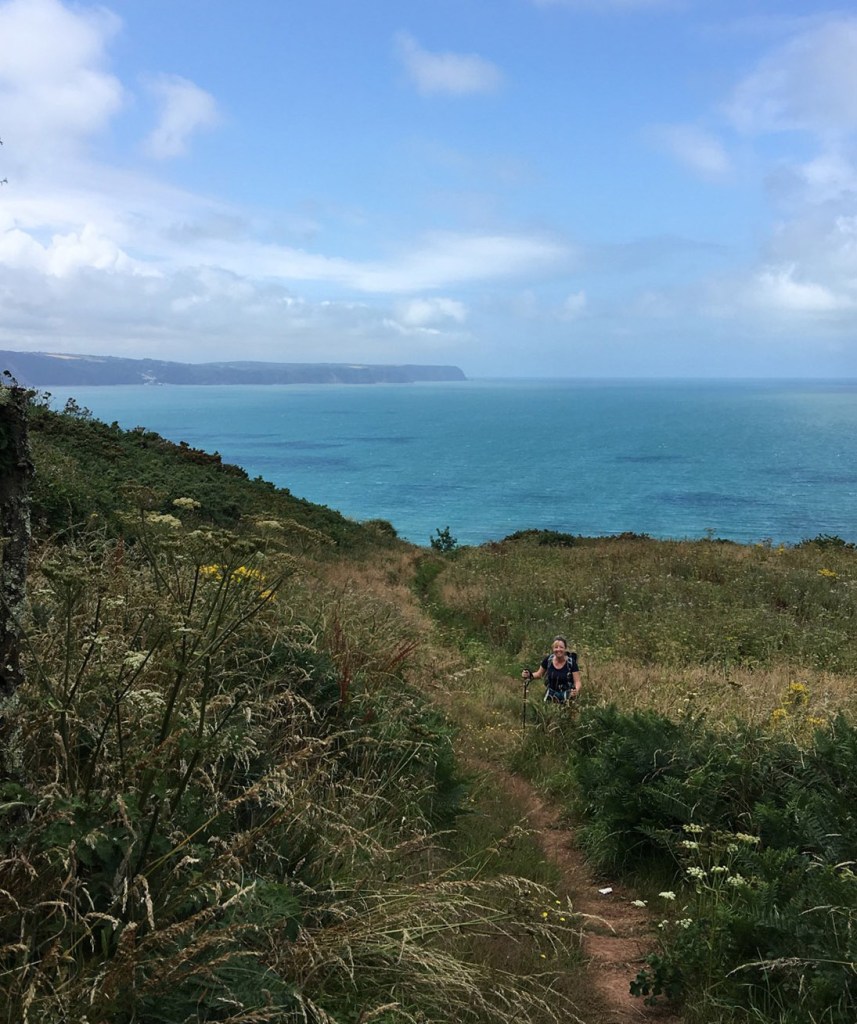
I’ve mentioned elsewhere on this blog how things slowly began to change when N and I started spending more of our weekends in Dorset and, over several years of camping and walking, camping and walking, we gradually got to know the Purbeck coast in all its glorious detail.
I can’t remember when we started talking about broadening our horizons and walking the entire South West Coast Path, all 630 miles of it, from Minehead to Poole. At first we used to speak about in in the hypothetical – ‘wouldn’t it be amazing if …?’ – but I couldn’t shift the mindset that someone like me didn’t do ambitious things like that. It’s funny how those labels from our schooldays live long into adulthood. Then, on a whim, I ordered a copy of the South West Coast Path Association’s annual guide from Amazon. Once I’d started to understand how the route breaks down, and ogled a few of the pretty pictures, I was sold.
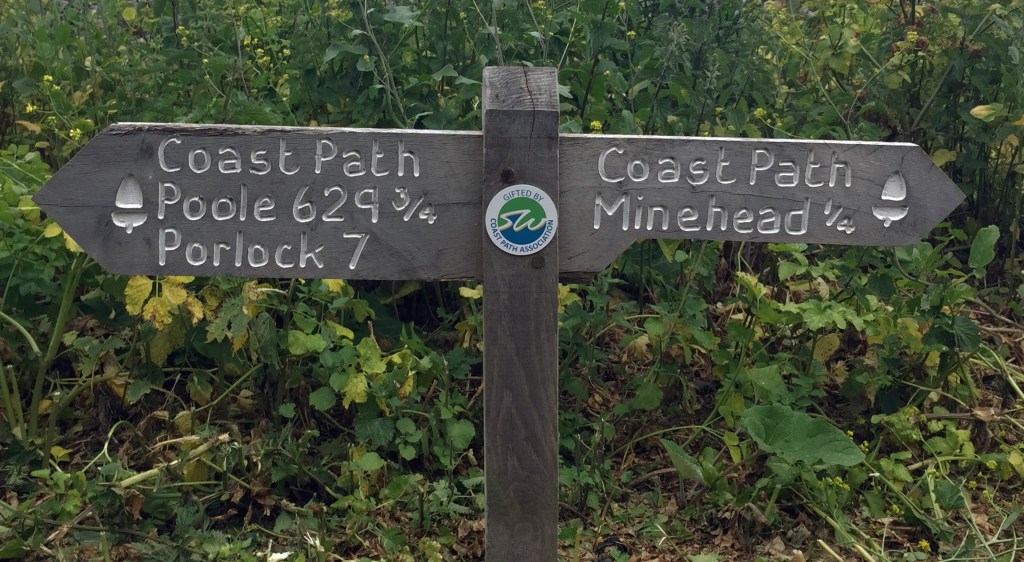
We set off from Minehead in May 2018, walking the Exmoor coast for three days over the Whitsun weekend. It was a brilliant taster and we returned home, our appetites duly whetted, with the intention of planning the next section asap. But life is busy and before we knew it, a year had passed and we’d made no progress. So this year, we decided to make it our main summer holiday: N was celebrating a big birthday and we wanted to do something memorable. (It speaks volumes for him that he chose the coast path over a chi-chi Greek island that I’d been pushing quite heavily.) I recorded each day’s walking on my Instagram stories, mainly as a reminder of what we’d seen and the places we’d passed through, and was both surprised and delighted by the response: it turns out that quite a few people are interested in the idea of walking the path and several wanted advice on the practicalities.
So here’s my brain dump. It’s not a comprehensive planning list and there are others out there who are much better qualified to give you chapter and verse. But if it helps you to get started and, more importantly, encourages you to think ‘if she can do it, then so can I’, then it will have been worth writing this post.
Get planning
Planning is everything when it comes to walking the South West Coast Path, unless you’re the hardy sort who doesn’t mind carrying a tent and sleeping bag, drifting along and pitching up wherever you can find a level bit of ground when you’ve had enough of walking. I am really, really not that person. Expect to spend a fair bit of time with maps, laptop and guidebooks open on your kitchen table as you’ll want to make sensible estimates of how much you can walk in a day (or half day) and plan your overnight stops accordingly.
This sounds complicated but in truth, the South West Coast Path Association website does much of the hard work for you and is therefore a very good place to start. This, and the printed guidebook, breaks down the route into the ‘standard’ 52-day itinerary and provides details of the terrain, the difficulty and some of the highlights you can expect to see along the way. It also has a useful accommodation finder, details of public transport, route changes, guidance on what to take – in fact pretty much everything you need.
Accommodation
Once you know how far you plan to walk each day, you can start looking at accommodation close to the path. On both occasions to date, we have taken the entirely lightweight option and booked B&Bs and pubs along the route. The SWCPA website and guide provide details of those that will accept one-night bookings (not all do in high season) but the usual online purveyors such as Booking.com are useful too for efficient real-time searching in a defined area. Be careful to check the precise location in relation to the coast path: when you’re in a car, it doesn’t matter too much if your B&B turns out to be a couple of miles away from the town or village centre but when you’re on foot and have been walking all day, you might not appreciate the extra distance.
I’ll list all the placed we stayed within my posts about the walk itself. So far, they’ve all been excellent.
How to avoid carrying loads of stuff
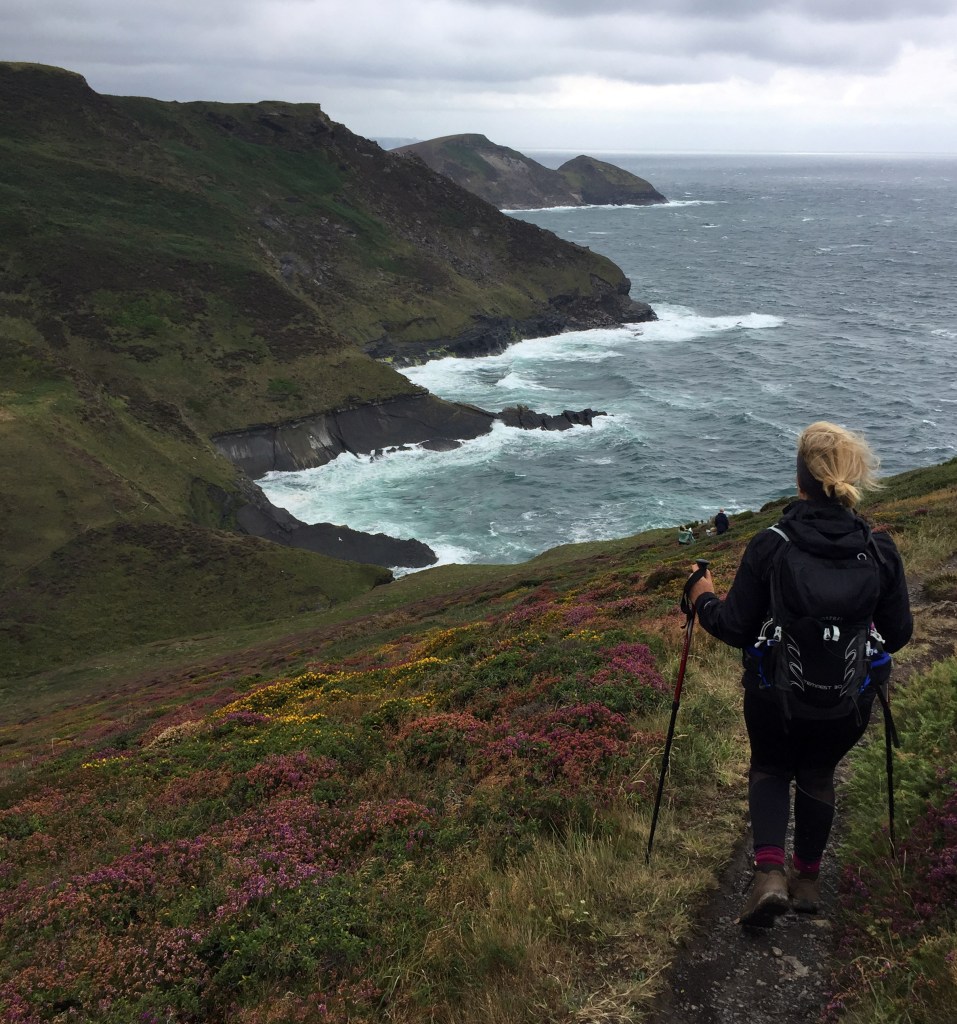
Unless you’re extremely good at travelling light, or strong enough to carry all your gear with you, you’ll want to make use one of the sherpa services such as Luggage Transfers. For a relatively small fee, they will move your bag on to your next destination and are worth every single penny, in my opinion; it’s a brilliantly efficient service and, after a hard day’s walking, you’ll be glad to have some clean, comfy clothes to change into.
Transport matters
One of our biggest practical challenges so far has been working out the logistics at the beginning and end of each section; the public transport options to date have been less than straightforward, i.e. time-consuming and complicated. On both occasions, we’ve driven our car to our end destination, parked in a side street or a long-stay car park and then taken a taxi back to the start of our walk. The luggage transfer people can provide competitive quotes but if you’re anywhere near Combe Martin, i.e. towards the beginning of the path, we can recommend the services of Taxi Ash, a reliable, friendly and helpful cabby who charges fair prices and isn’t short of good stories about the local area.
What to take with you
There’s plenty of advice online about the kind of gear you need when walking a long-distance path so I won’t replicate that here. At the risk of teaching you how to suck eggs, make sure you take plenty of water (a hydration bladder is a great idea) and snacks to eat along the way. In spite of my tongue-in-cheek Instagram photos of barista coffee-stops, you’ll only tend to find them in the more touristy destinations, e.g. on popular surfing beaches, and there are certain wilder stretches where you won’t stumble upon a refreshment stop all day. We also carried some energy gels just in case our batteries ran low but found that we (or I, more precisely) only needed to use them once. Oh, and I can highly recommend keeping some Haribo or jelly babies in your pocket when you need a little boost. We had a rule that we would eat a handful when a particularly severe-looking cliff loomed into view. It worked for us!
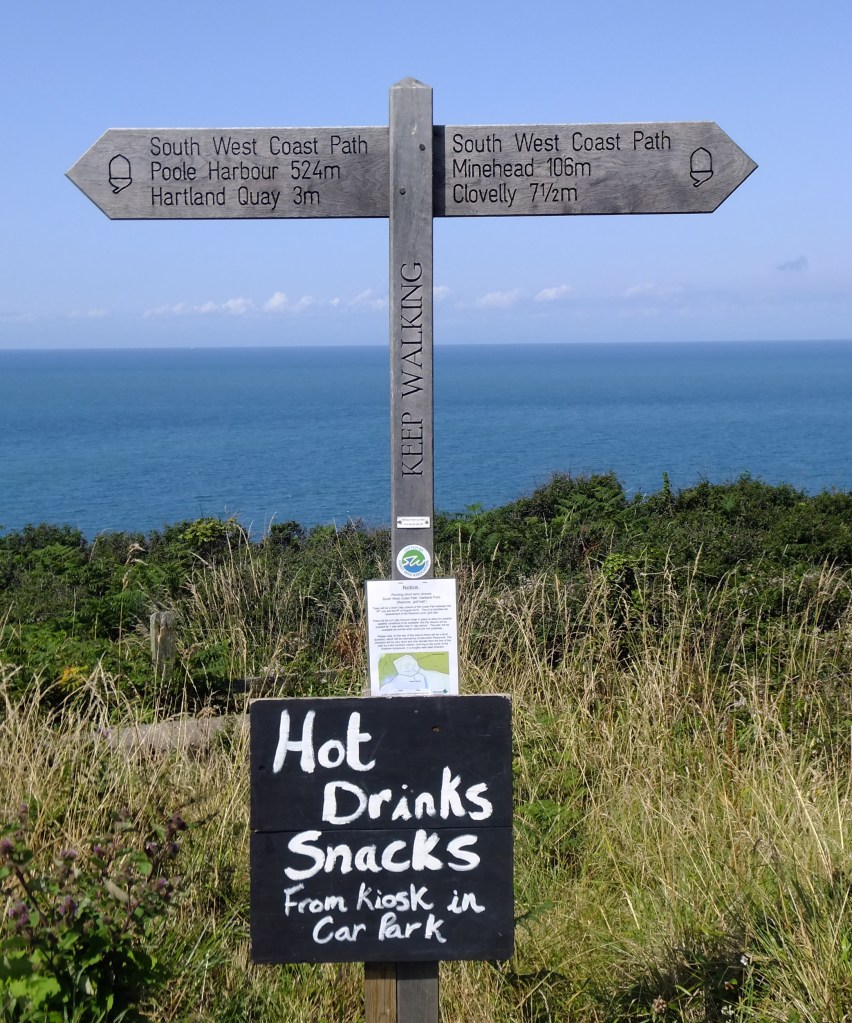
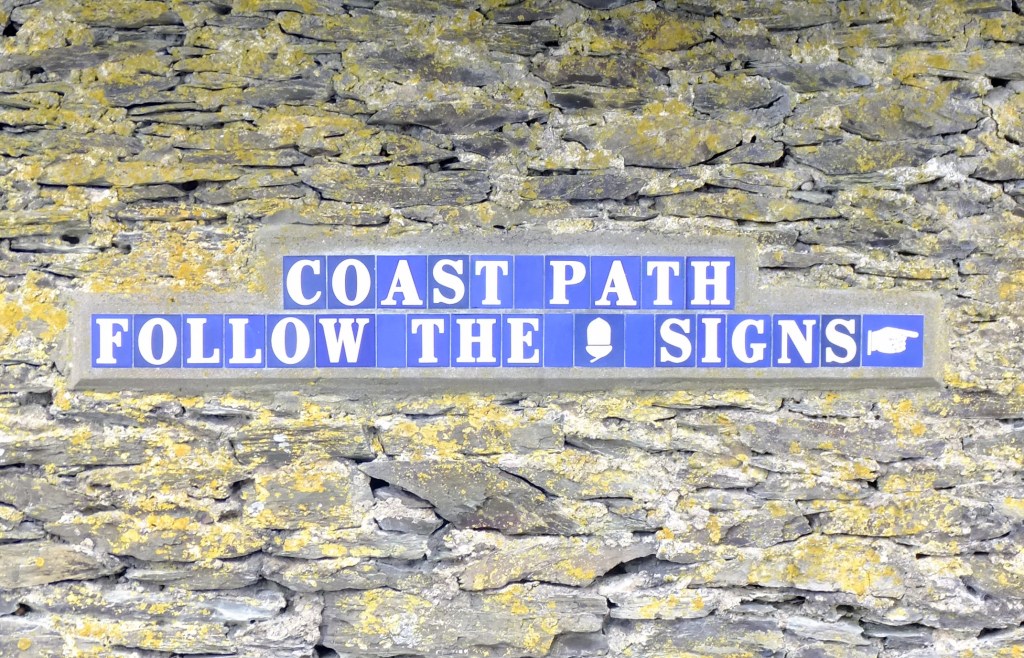
It’s worth carrying the relevant OS map and/or one of the coast path guidebooks with you when you walk (the Cicerone map booklets are conveniently pocket-sized). Obviously, it’s not difficult to work out which way you need to walk when you have the sea on one side, as well as some very clear waymarking in the form of the regular acorn symbols, but it’s helpful to refer to a map when you need to get a sense of what’s coming up, or on the odd occasion when the path has been rerouted. N also got me into the habit of studying the map the evening before our walk so that I had a good idea of how far we had to go the next day. (If I don’t do this, I don’t pace myself properly.) On longer sections, we would also rough out where we intended to stop for lunch, pushing ourselves to go a little further than halfway to ensure that the postprandial part of the day was shorter as we began to tire.
When to go
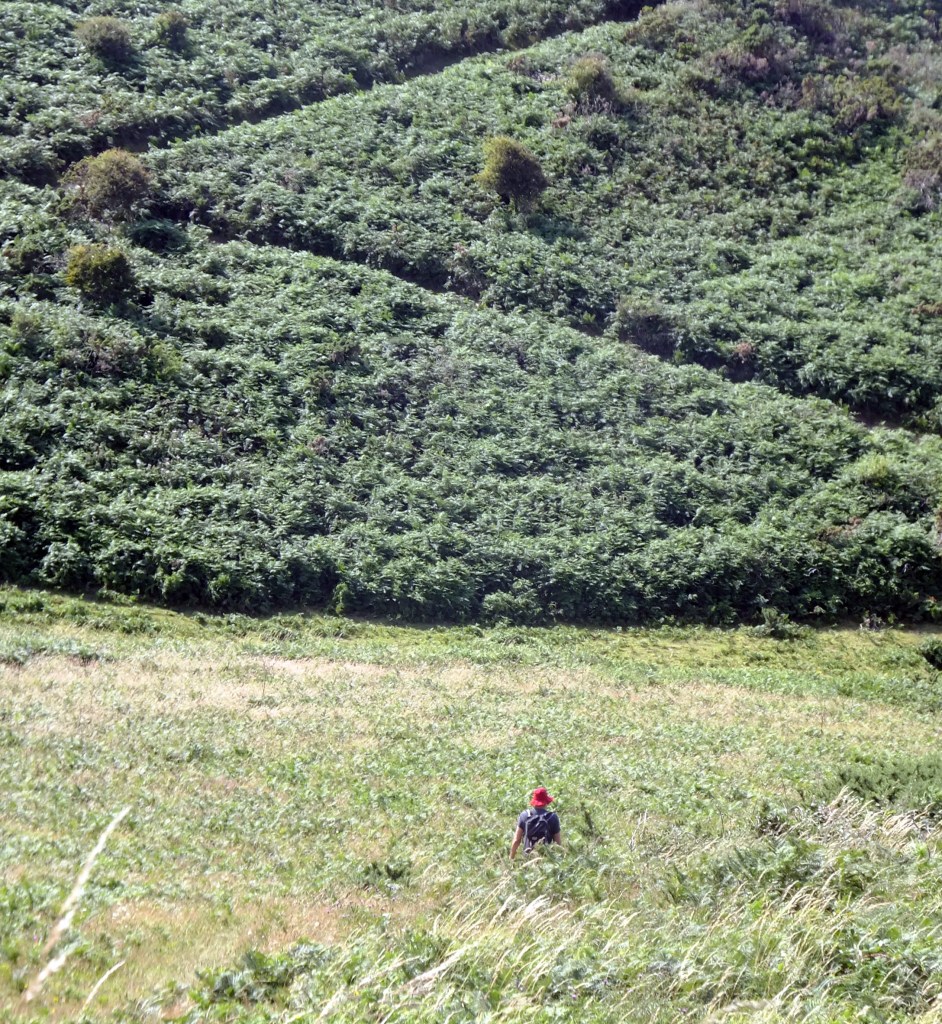
You can do day walks on the South West Coast Path at any time of year but some seasons are better than others if you’re planning to cover longer distances. Spring and late summer/early autumn are traditionally considered to be the best times of year given that it’s likely to be neither too cold nor too hot. Summer, of course, offers lots of daylight and (theoretically) the brightest weather but be warned that hot, sunny days will definitely make the going much harder, even if you’re doing a relatively easy section. (Keep an eye out for my post on Mortehoe to Braunton, which we undertook on the hottest day of the year.) If you are walking in high summer, check the weather forecast and consider an early start if necessary so that you can get most of your walking done in the coolest part of the day. Some B&Bs will serve an earlier breakfast or offer you the option of a breakfast tray delivered to your room (hello Hartland Quay Hotel) so that you can hit the path nice and early. The shorter days of winter are probably best reserved for training walks or more gentle ambles when you haven’t got to be at a particular destination by sunset.
Other considerations
Be honest with yourself about your fitness levels and how far you can walk in a day. The standard 52-day itinerary breaks the coast path down to distances of between roughly nine and 16 miles a day; while this might not sound like very much if you’re a regular walker, most sections have a fair degree of ascent so you will feel it if you’re not used to hills, particularly two or three days in. (If you’re super fit, you might want to consider the 30- or 42-day itinerary although my mind boggles at either of these prospects.) If the idea of walking nine to 16 miles a day seems too much right now, ease yourself into it by doing regular weekly walks, hilly if possible, increasing the distance slightly each time.
As you’ll know if you’ve read my other posts, we walk a lot at the weekend but, even so, once we’d decided to tackle the path, we upped the distance on our training walks on the Dorset coast to ensure we were preparing ourselves adequately. This was an important part of my mental preparation: I needed to know I could cover distances and terrains that were comparable with what we would be walking day-to-day on the coast path, and it helped to do that in a landscape that was familiar to me. Of course, the Dorset coast makes up the last part of the South West Coast Path and we will end up retracing our usual weekend walks when we eventually get down to the last 60 miles or so. And if you think we don’t need to do that section because we’ve done it already, then you really don’t know me at all 😉
If you’re planning to tackle more than a few days at a time, you may want to consider building a few rest days into your itinerary. We didn’t during our most recent eight-day walk – other than a half-day in Appledore – and I sort of regret it, partly because our aching legs and feet sometimes could have done with some time to rest but also because we passed through some truly beautiful areas that were worthy of greater exploration. Oh well, at least we now have lots of inspiration for future holidays.
I found walking poles enormously helpful in taking the strain off my knees (steep, seemingly never-ending steps are a common feature of the path) and a complete godsend when heaving my bulk uphill (you will build good triceps in the process), so you may want to consider investing in a pair. Even N, who had never shown an interest in walking poles before, bought some for our most recent jaunt, top of the range Lekis of course …
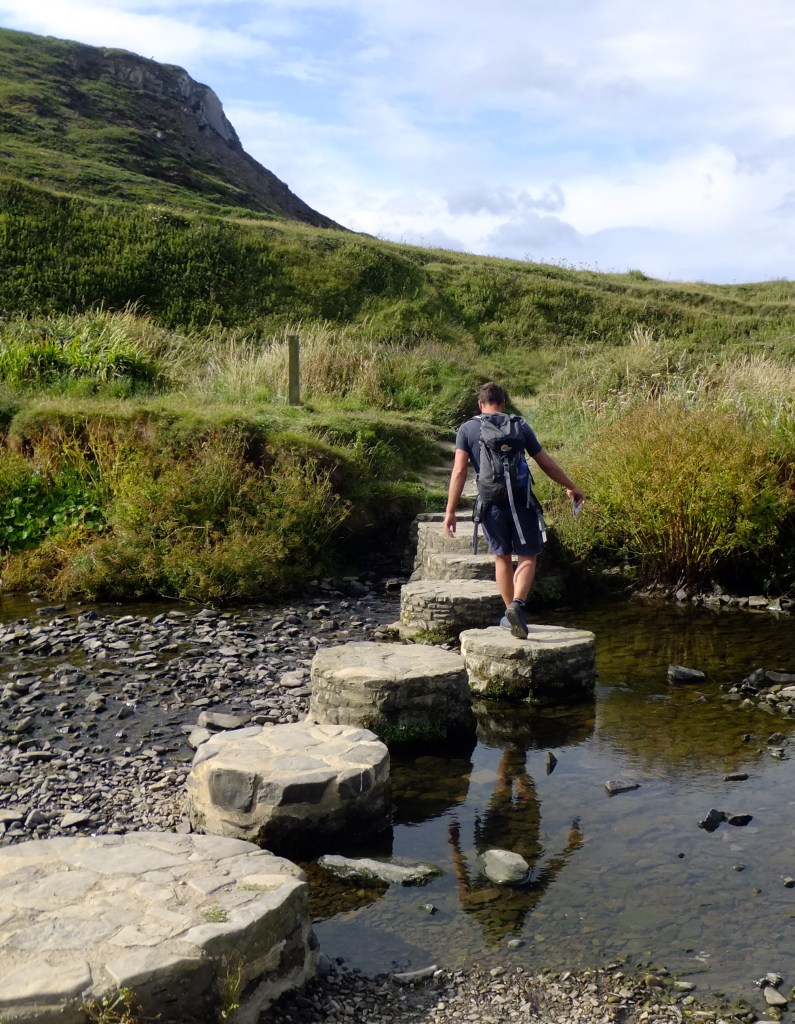
Think about whether you want to walk alone or with a friend or partner. You may be completely happy in your own company but some stretches are rather remote, not to mention steep, so you might welcome the reassurance of having someone with you so that you can support and motivate each other when you need it. If you do walk on your own, make sure you let someone know where you are and what time you expect to arrive at your destination each day. Chances are you, you will fall in sync with other walkers from time to time so you may find yourself regularly do-si-do-ing with someone else who’s doing the same section as you. Depending on your (and their) viewpoint, this can be a positive or a negative: while you might meet an easy-going, like-minded soul who happens to walk at the same pace as you and shares your take on life and the universe, there’s also the risk that you could find yourself saddled with someone you’d rather not be saddled with. The idea horrifies N so much that he will insist we speed up if we’re threatening to get in step with someone else. I dare say he’s right. (Read Sasha Harding’s take on the subject in her funny and beautifully illustrated book A Brush with the Coast.)
And finally: why do it at all?
After reading the above, you might think that walking the SWCP sounds like one almighty faff, not to mention a physical, mental and logistical challenge. Truth be told, it can be all of those things but it is also 100% totally and utterly worth it. Here’s what you’ll gain:
- never-ending, ever-changing views of one of the most spectacular coastlines in the country, Europe and possibly the world
- a sense of accomplishment
- huge benefits to your physical health: your stamina will improve and you will feel fitter and stronger, I promise, even if there are some days when every single muscle seems to ache
- huge benefits to your mental health: I can’t cover this in a single bullet point so I will, at some stage, write a full post on the subject but for now, let me just say that walking, and long-distance walking in particular, has been the single most important thing in sorting out my overfrazzled, sometimes-too-noisy brain
- the ability to see, focus on and appreciate the detail, which is so often lost in this crazy, fast-paced world.
So there you have it. Don’t delay, start planning! And in the meantime, I’ll try to catch up on our SWCP story so far …
 Dorset for Days