
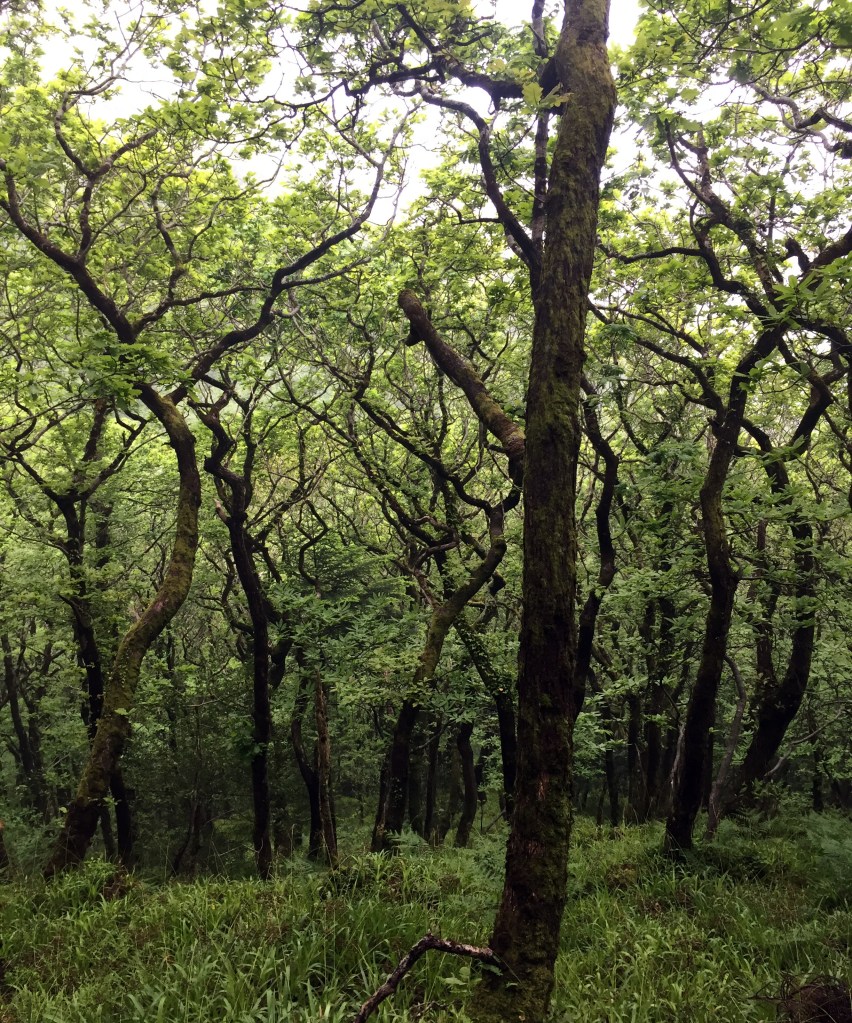
Ancient woodlands and rampant rhododendrons
I think of three things when I think of the walk from Porlock Weir to Lynton:
- trees (old and numerous)
- rhododendrons (purple and numerous)
- ticks (small and numerous)
For the third item in the above list, the fear was no doubt worse than the reality, even if Culbone Woods are notoriously ticky, but it didn’t help that almost every single gate we passed through bore a warning sign. I’m already paranoid about these evil little critters and the constant reminders did not reassure me, especially When Nature Called. You can understand why. Time to invest in a She-Wee, perhaps.
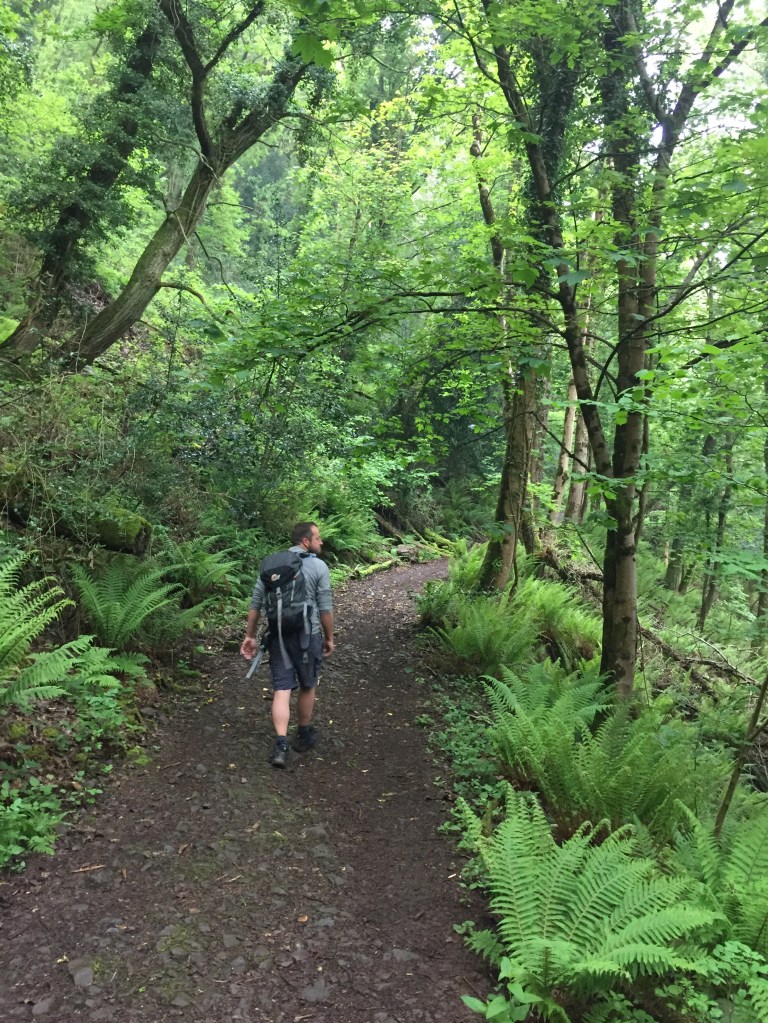
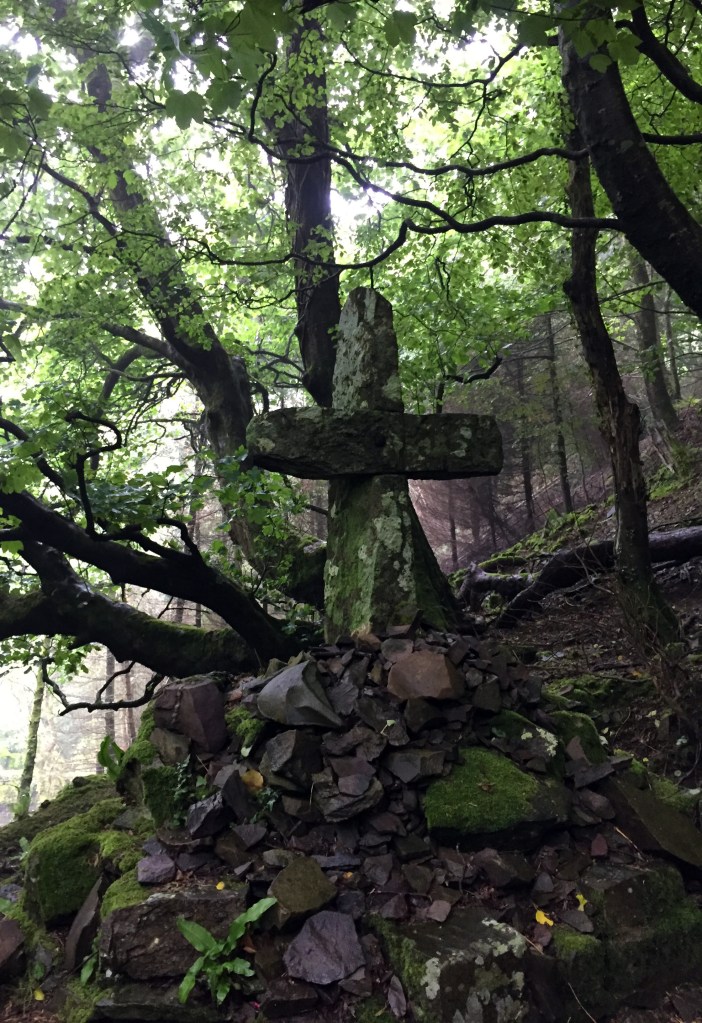
Tick fear aside, the lengthy wooded part of the route, which began soon after we left Porlock Weir and made up the lion’s share of the day’s walking, was both intriguing and atmospheric. The ancient trees, mainly oaks and whitebeams, were moss-covered and twisted. Often, the path climbed up high but the sea, way down below, could seldom be seen through the dense canopy of trees and carpet of bracken; if ever you wanted to go forest bathing, this would be a good place to do it. Jurassic Park sprang to mind. Even the occasional sign of human existence had an air of mystery, such as the tiny church at Culbone or the Sisters’ Fountain, a small holy well beneath a 19th-century cross. I’ve subsequently discovered that this area was once used for burning charcoal by a colony of lepers, who were forbidden from entering Porlock.
At some point we crossed into Devon, although I couldn’t tell you exactly where that was, having emerged, after some hours, from the woodland to pass through a pair of gate posts, each topped with a carved boar’s head. These mark the entrance to the privately owned Glenthorne Estate (have a look at this Country Life article for a glimpse of its Daphne du Maurier-esque loveliness), the coast path sharing its drive briefly before veering off into another dream-like scene, this time along a long stretch of rhododendron-smothered cliffs. I was reminded of the poppy scene in The Wizard of Oz, so intense was the colour. Unfortunately, it also triggered a marathon ranting session from N, who proceeded to lecture me about the invasive nature of this non-indigenous species, which is responsible for the destruction of many native habitats. That told me, then. His displeasure at the scene took the wind out of my sails somewhat so I didn’t take any photos.
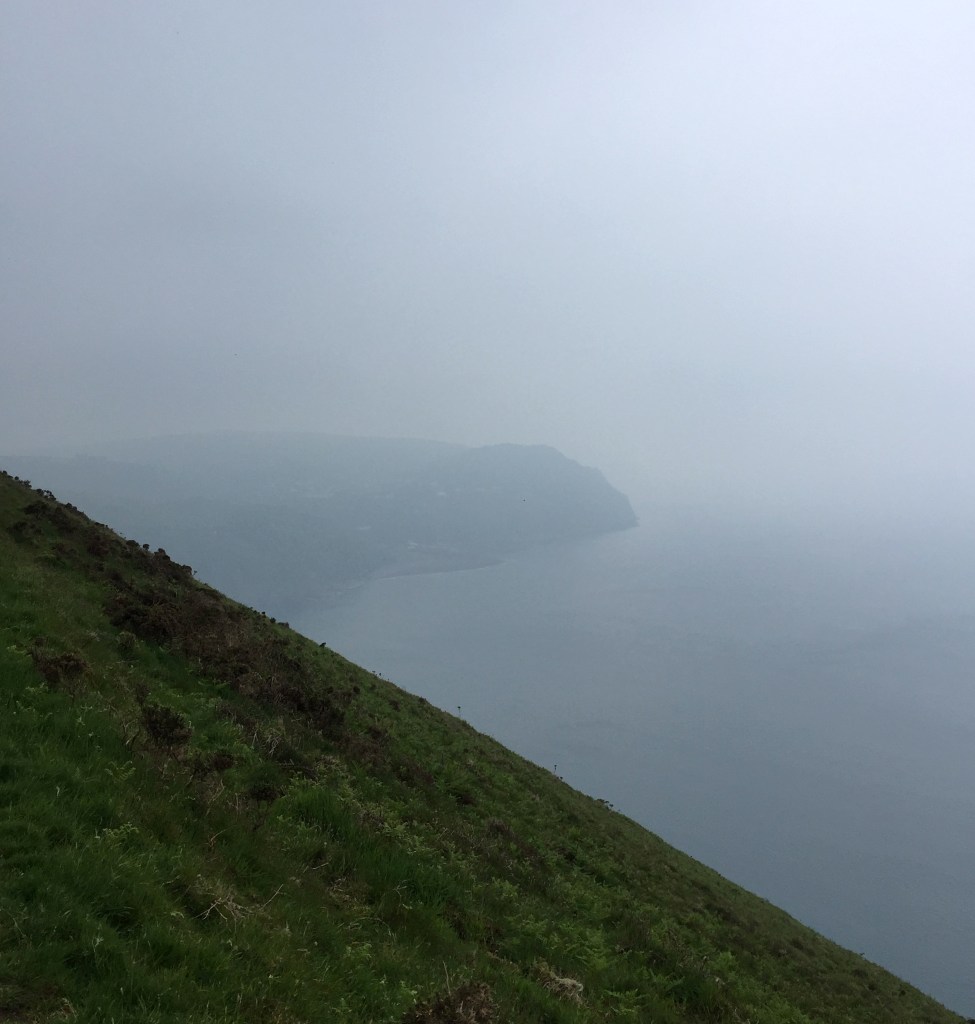
The landscape eventually became more open and the path then joined a rather bleak tarmacked road leading to Foreland Point. We didn’t take the detour out to the lighthouse (by this time, we weren’t interested in adding to our step count) but continued up the long, final ascent (see how naturally I use that word) to Countisbury, where the Blue Ball Inn winked at us and showed an ankle but failed to make us stop as our destination was now coming into view. From here the coast path runs parallel with the road down into Lynmouth. It’s quite a long descent (there I go again) with a steep drop on one side. You can apparently see Wales on a fine day but I can’t vouch for that on account of the misty conditions.
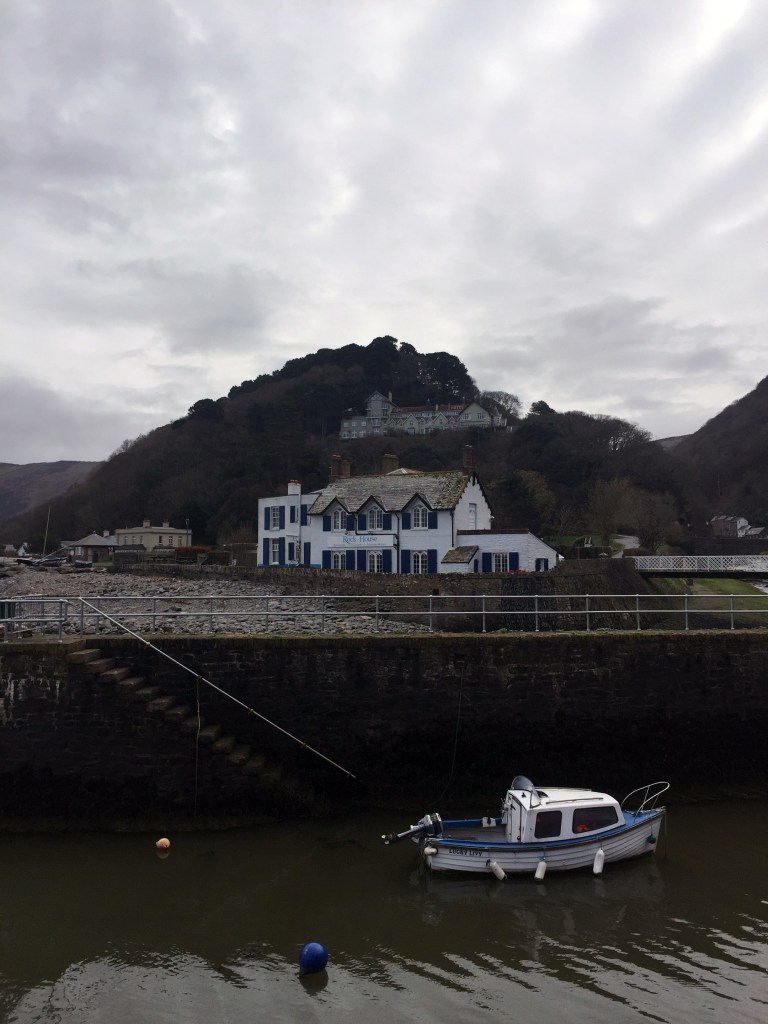
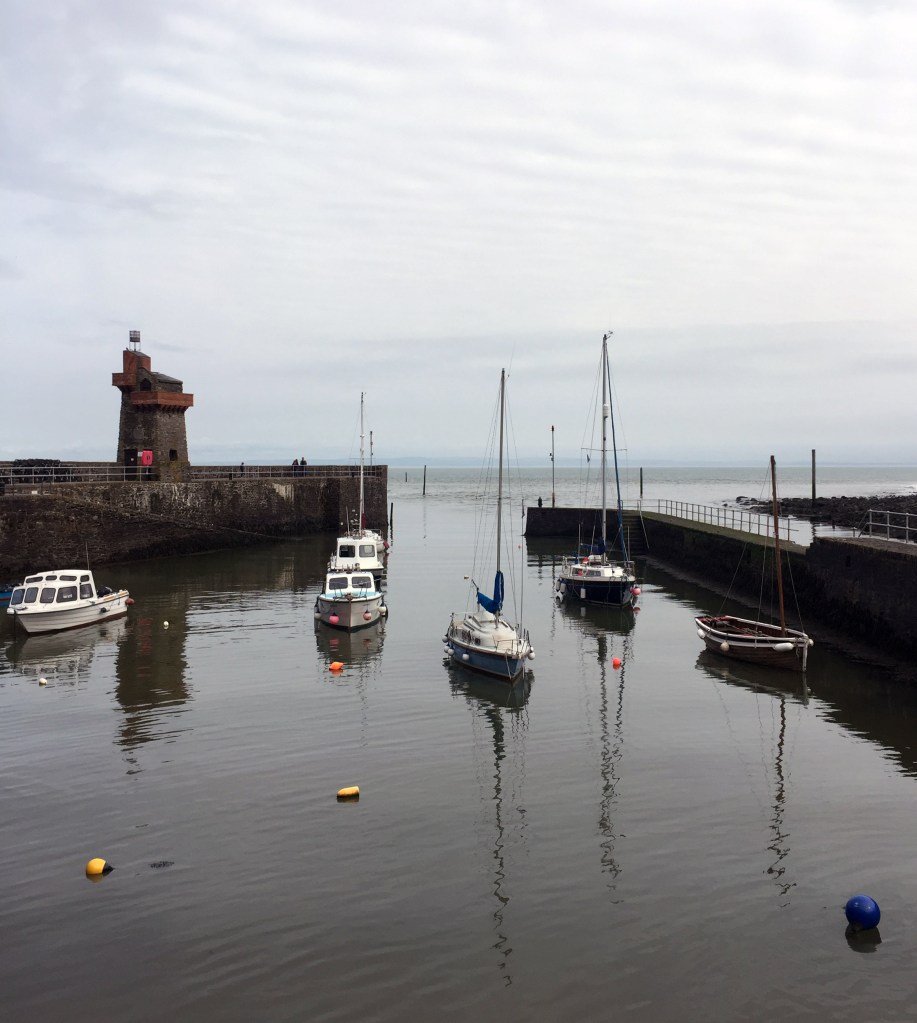
Lynmouth has a jolly air in any weather, somewhat belying the tragic events of 1952, when an accumulation of flood water forced its way down the narrow river valleys and devastated the town. The village and its twin of Lynton, teetering vertiginously 500 feet above, are quite a sight, their buildings more alpine in style than anything you would usually see in the UK. This architectural fashion owes much to the Romantic poet Robert Southey, who in 1799 named the area ‘England’s little Switzerland’. The whole effect is very charming indeed.
We had our customary pint and packet of crisps outside the harbourside Rising Sun, making a mental note to come back for dinner some time (the menu looked delicious but it was fully booked that evening), before heading on up to Lynton and our B&B for the night. We were in good time to catch the funicular cliff railway, the highest and steepest water-powered railway in the world, but I’d somehow got it into my head that this would be cheating (I know …), so after our long day’s walk, I made poor N walk up the near-vertical, zigzagging tarmac path that connects the two villages. Readers, it was a total calf-burner. Sticklers like me are such fun, don’t you think?
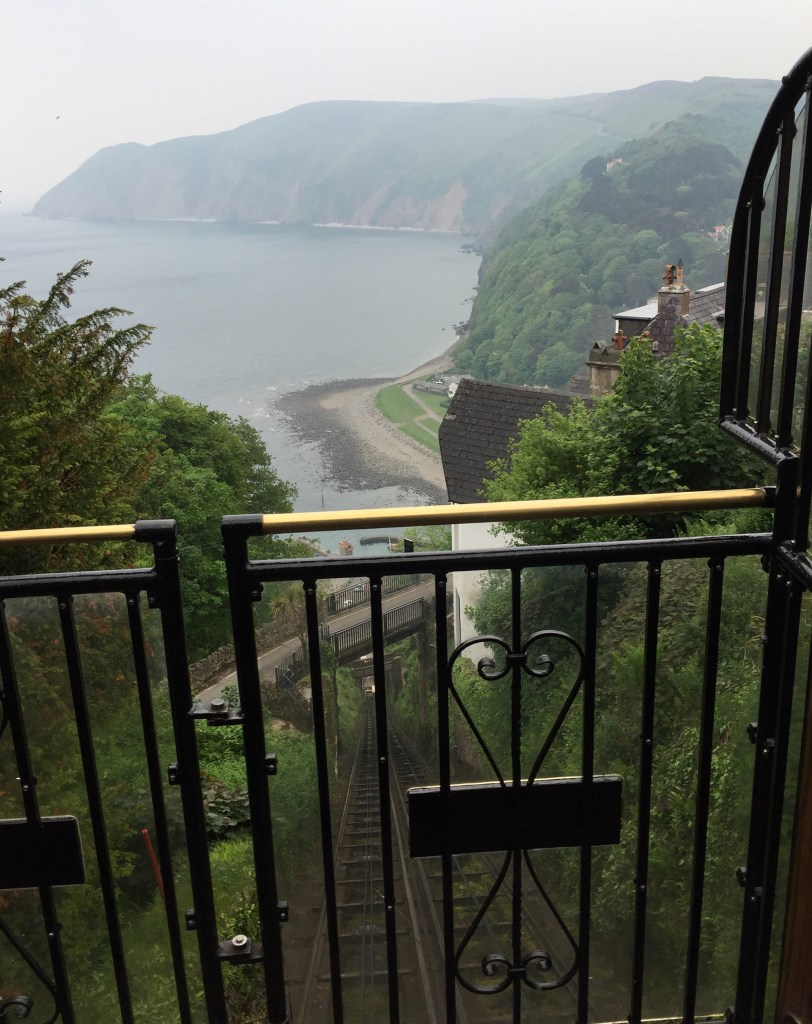
We checked in at the St Vincent Guest House, a beautiful Georgian house with character in spades and its own resident ghost, and were delighted with our cosy twin room up on the top floor. After bathing and checking for ticks (TMI?), we popped down to Lynmouth again for chips on the seafront, using the funicular this time. With the last chip eaten, we were both suddenly overwhelmed by tiredness (maybe it was the carbs) and the desperate need to sleep. We funiculared back up to Lynton, crashed into our Howard and Hilda beds and fell into a deep slumber before the sun had set, unaware of the almighty thunderstorm that took place later that night.
Need to know
OS Map: OL9 Explorer map of Exmoor
Refreshments: This is a lonely section so you’ll want to carry plenty of supplies to see you through to Lynmouth. It’s one of the reasons why the wonderful Rodney Cottage Walkers’ Honesty Cafe (as you come out of the woods near Glenthorne Cliffs) could win a prize for being just about the most welcome sight along this whole stretch. There are plenty of places to eat once you get to Lynton and Lynmouth; we definitely have unfinished business with The Rising Sun.
Accommodation: The St Vincent was excellent but there are countless other options in both Lynmouth and Lynton. You might want to consider staying ‘up top’ in Lynton to save you from starting the next day with that steep walk up. Although you can of course take the funicular if you don’t mind ‘cheating’ …
Distance: 12.3 miles
Duration: 5.5 hours
Rating: Moderate, strenuous in parts
 Dorset for Days
My wife and I did this section last month on our way to Land’s End. We had a nice day, but the last parts were terrible…high winds and horizontal rain. Hope your weather improves.
We actually walked this last year … I have a backlog of posts to write up! Fortunately, with one exception, we’ve had pretty good weather from this point onwards. Looks like I need to catch up on your adventures!